

Dubai Metro Gold Line: Everything you need to know about routes, design and features
Strategic interchanges to link metro lines with Etihad Rail and key hubs
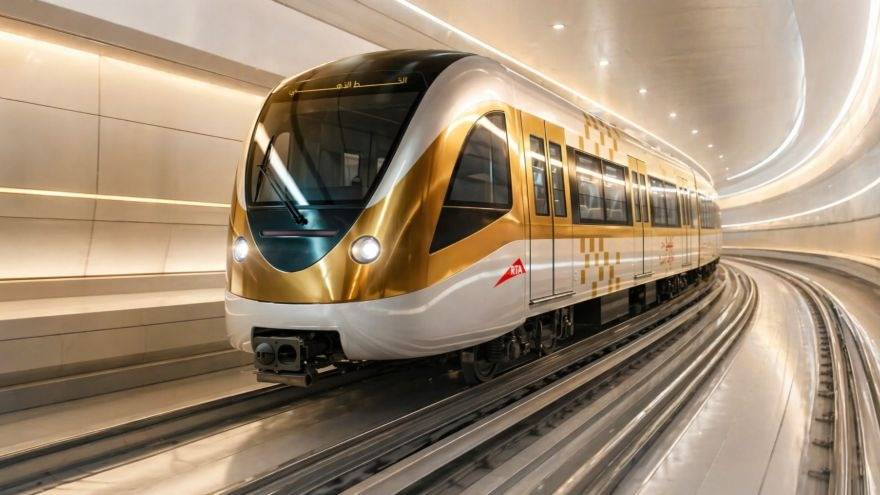
DUBAI – Dubai’s transport network is set for its most ambitious expansion yet with the announcement of the Dubai Metro Gold Line.
Officially unveiled by His Highness Sheikh Mohammed bin Rashid Al Maktoum, Vice President and Prime Minister of the UAE and Ruler of Dubai, the Dh34 billion project introduces a fully underground 42-kilometre metro corridor designed to reshape mobility across the emirate.
Mohammed bin Rashid, in the presence of Hamdan bin Mohammed, Maktoum bin Mohammed, and Ahmed bin Mohammed, approves the Dubai Metro Gold Line, the largest sustainable transport project in the emirate with a total investment of AED 34 billion. pic.twitter.com/yu5L2FP4H5
— Dubai Media Office (@DXBMediaOffice) April 22, 2026
The line is scheduled for completion on 9 September 2032 and is expected to increase the overall length of the Dubai Metro network by 35 percent. It will serve approximately 1.5 million residents while enhancing connectivity across 15 strategic areas and 55 major real estate developments currently under construction.
The Gold Line marks a major step in Dubai’s long-term Rail Network Plan 2032, positioning the city for deeper integration between metro services, urban development and inter-emirate transport links.
Dubai Metro Gold Line
The Dubai Metro Gold Line is designed as the first fully integrated underground metro line in the emirate. Spanning 42 kilometres, it significantly extends the existing metro system and introduces a new layer of high-capacity urban connectivity beneath the city.
Dubai Metro Gold Line Project, the largest transportation project in Dubai, with a total cost of AED 34 billion.@rta_dubai pic.twitter.com/ekmE8zcosV
— Dubai Media Office (@DXBMediaOffice) April 22, 2026
The project carries a total investment of Dh34 billion and is expected to redefine daily commuting patterns across key residential, commercial and mixed-use zones. The tunnel network is described as equivalent to twice the current metro tunnelling infrastructure, highlighting the scale of underground development involved.
Construction will utilise advanced tunnelling technology aimed at minimising disruption to traffic, buildings and ongoing urban activity above ground, ensuring continuity in one of the world’s fastest-growing cities.
Route map
The Gold Line will feature 18 stations across 15 key strategic areas, forming a cross-city corridor that links Dubai’s historic core with emerging residential and business districts.

The route stretches from Al Ghubaiba in the heart of Old Dubai to Jumeirah Golf Estates in the city’s expanding southern corridor. Designed with loops and interconnected segments, the line will improve both short-distance travel within communities and long-range connectivity across the wider network.
Key areas along the route include Bur Dubai, Business Bay, City Walk, Dubai Hills, Meydan, Dubai Sports City and Arabian Ranches, among others. These stations are expected to serve densely populated neighbourhoods as well as major future development zones.
Key interchanges
A defining feature of the Gold Line is its integration with existing and future transport systems. The route has been designed to function as a central connector within Dubai’s wider metro and rail ecosystem.
At Al Ghubaiba, the Gold Line will link with the Green Line, strengthening access to central and historic districts. In Business Bay, it will connect with the Red Line, improving cross-city commuting efficiency between major business hubs.
Further along the route, Meydan will serve as a future interchange with Etihad Rail’s passenger station, while Jumeirah Golf Estates will connect both the Red Line and another future Etihad Rail station. These links position the Gold Line as a key bridge between intra-city metro travel and national rail connectivity.
Communities served
The project is designed to support rapid urban growth across Dubai by improving access for approximately 1.5 million residents. It will also enhance transport links for 55 major real estate developments that are currently under construction.
Communities expected to benefit include established districts such as Jumeirah, Satwa and Bur Dubai, alongside high-growth areas like Dubai Hills, MBR City, Al Barsha South and JVC.
Newer and emerging developments including Dubai South-adjacent communities, Dubai Sports City, Dubai Studio City, Tilal Al Ghaf and Al Barari are also included in the wider catchment area. The network aims to reduce travel time and increase accessibility across residential and commercial zones.
Engineering design
The Gold Line’s engineering approach focuses on deep underground construction using advanced tunnelling systems designed to minimise surface disruption. This includes techniques that allow construction beneath active roads, buildings and developed urban environments without major interference to daily life.
The tunnel system is planned to be significantly larger than existing metro infrastructure, enabling higher capacity and smoother operations across long-distance routes. Stations will be integrated into urban developments, ensuring seamless connectivity between residential communities, business districts and transport hubs.
The design also prioritises multi-modal integration, ensuring compatibility with both existing metro lines and future rail systems as Dubai continues expanding its transport network.
Dubai’s Rail Network
The Gold Line forms a central component of Dubai’s Rail Network Plan 2032, which aims to create a fully integrated transport ecosystem across the emirate. By linking metro lines with Etihad Rail and expanding coverage into key development zones, the system is designed to support long-term urban growth.
Once operational, the Gold Line is expected to significantly reduce reliance on road transport while improving connectivity across major residential, commercial and leisure destinations.